।। श्री राम जय राम जय जय राम ।। जय श्री कृष्ण ।।
हरि मंदिर
Hari Mandir
Shree Sanatan Dharam Sabha (Regd.), Geeta Bhavan
Plot #353, Guru Tegh Bahadur Nagar, Mumbai — Est. 13 April 1950
Our Temple
Shree Sanatan Dharam Sabha (Regd.),
Geeta Bhavan — Hari Mandir
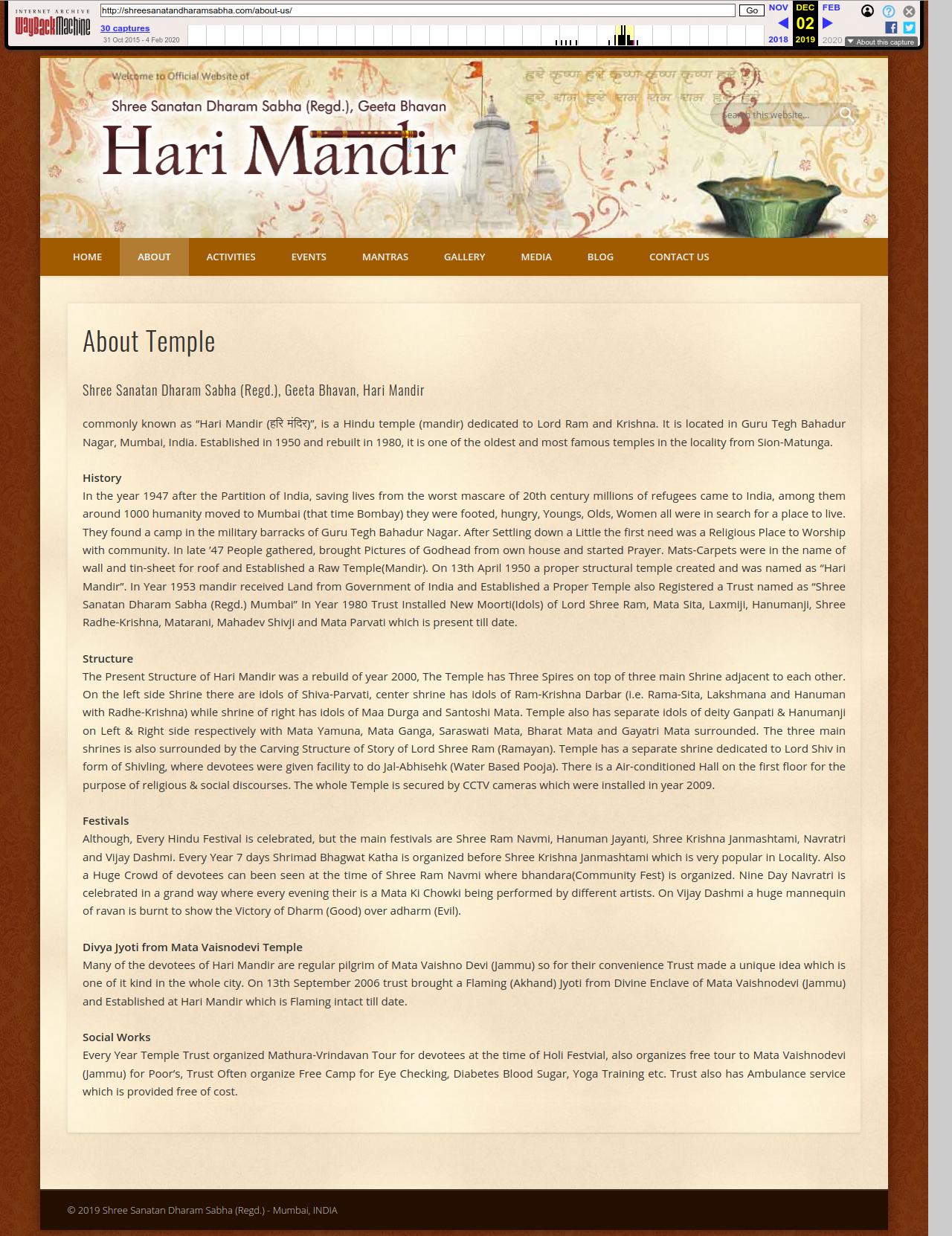
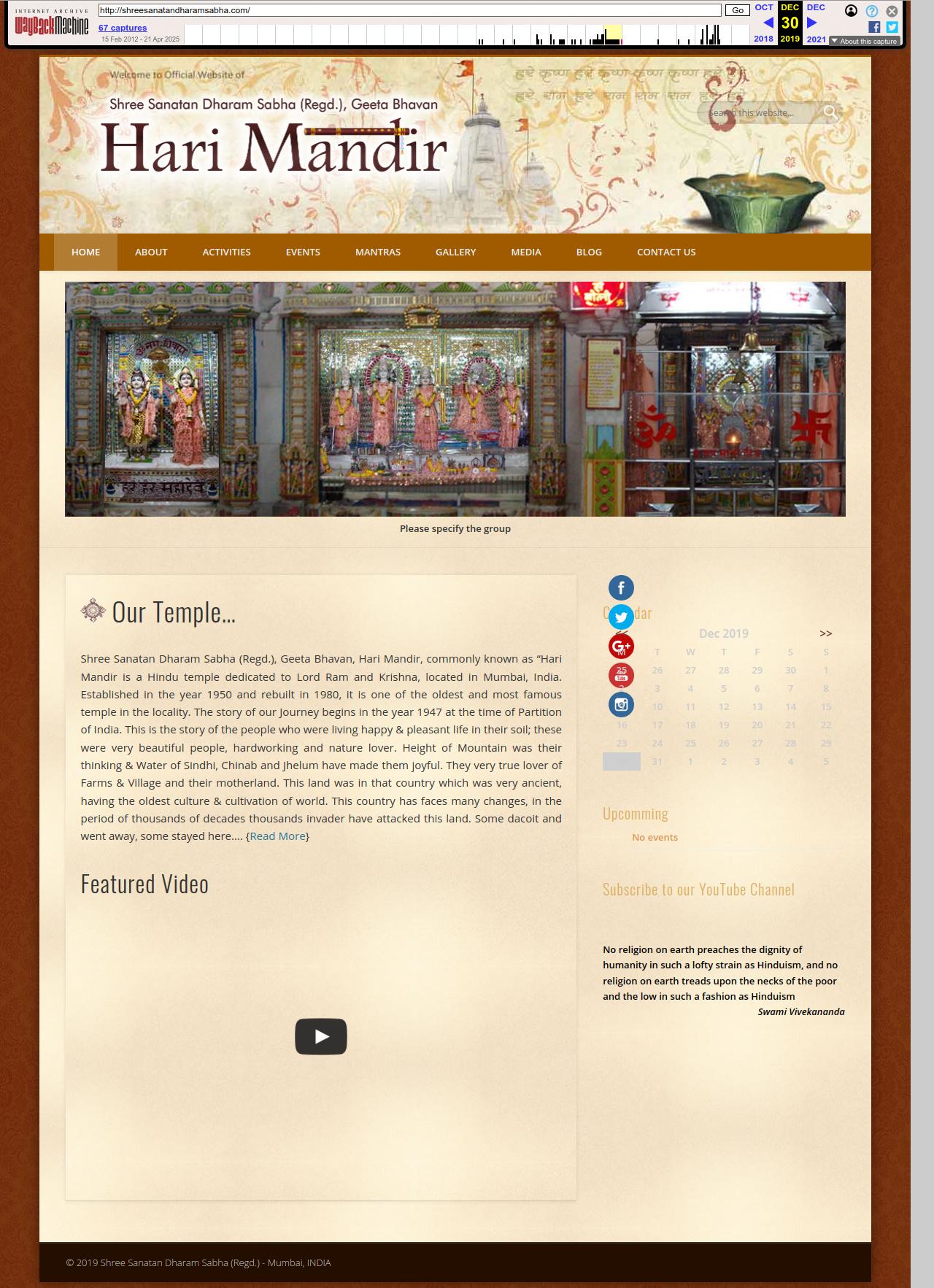
Commonly known as Hari Mandir (हरि मंदिर), the temple is dedicated to Lord Ram and Krishna, located at Plot #353, Guru Tegh Bahadur Nagar, Sion-Koliwada, Mumbai.
Established on 13th April 1950 by partition refugees who arrived in 1947, the temple began with mats for walls and tin sheets for a roof. Today it stands as one of Mumbai's oldest temples — with three main shrines, a sacred Akhand Jyoti from Mata Vaishnodevi, and a legacy of 75+ years of community service.
A sacred Akhand Jyoti was brought from the Divine Enclave of Mata Vaishnodevi (Jammu) and established at Hari Mandir — the only one of its kind in all of Mumbai.
Sacred Calendar
Main Festivals at Hari Mandir
Ram Navami
Grand Bhandara (community feast) with devotional programs. Thousands of devotees attend every year.
Hanuman Jayanti
Sundar Kand Path, Hanuman Chalisa, and prasad distribution on the birth of Bhagwan Hanuman.
Janmashtami
7-day Shrimad Bhagwat Katha followed by midnight Krishna Janma celebration, Shobhayatra, and Brij Ki Holi.
Navratri
Nine nights of Mata Ki Chowki by different artists, culminating in Vijay Dashami Ravan Dahan.
Mahashivratri
Night-long Shiva Puja at the Shivling shrine with Jal-Abhishek open to all devotees.
Diwali
Lakshmi Puja, Annakut, Govardhan Puja, and community celebrations with diyas lighting the mandir.
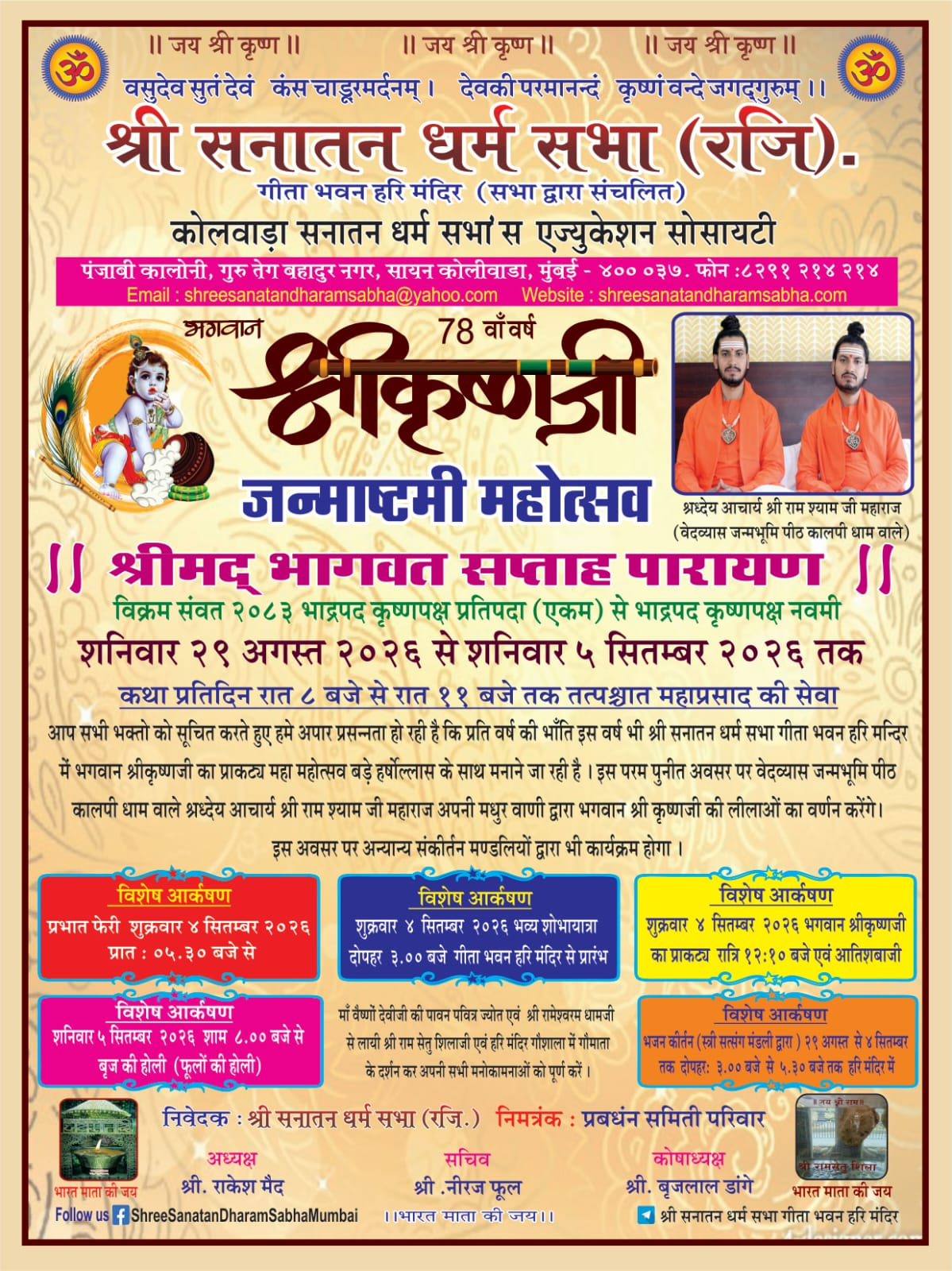
78th Annual Celebration — 2026
Janmashtami Mahotsav 2026
Shrimad Bhagwat Saptah Paraayan — Saturday 29 August to Saturday 5 September 2026. Katha daily 8 PM–11 PM. Presided by Acharya Shri Ram Shyam Ji Maharaj (Kalpi Dham).
- 🌅 Prabhat Pheri — 4 Sep 2026, 5:30 AM
- 🎺 Grand Shobhayatra — 4 Sep 2026, 3:00 PM
- 🌟 Krishna Prakatya & Aatishbaazi — 12:10 AM
- 🌸 Brij Ki Holi (Phoolon Ki Holi) — 5 Sep 2026, 8 PM
Community Service
Seva — Our Social Works
Mathura-Vrindavan Yatra
Annual free pilgrimage to Mathura & Vrindavan during Holi festival, open to all devotees.
Vaishnodevi Yatra
Free pilgrimage tour to Mata Vaishnodevi (Jammu) organized for economically weaker sections.
Free Health Camps
Eye camps, diabetes screening, dental treatment, and yoga training — all free of cost.
Free Ambulance Service
The Trust operates an ambulance provided entirely free of cost to those in need.
Student Support
Books, school bags, and stationery items distributed to needy students every year.
Disabled Support
Specially equipped tricycles distributed to disabled men and women for mobility assistance.
Frequently Asked
Questions About Hari Mandir
Where is Hari Mandir located in Mumbai?
Hari Mandir is at Plot #353, Punjabi Colony, Guru Tegh Bahadur Nagar (GTB Nagar), Sion-Koliwada, Mumbai – 400037. The nearest railway station is Sion (Central Line), approximately 10 minutes away by auto-rickshaw.
What are the timings of Hari Mandir?
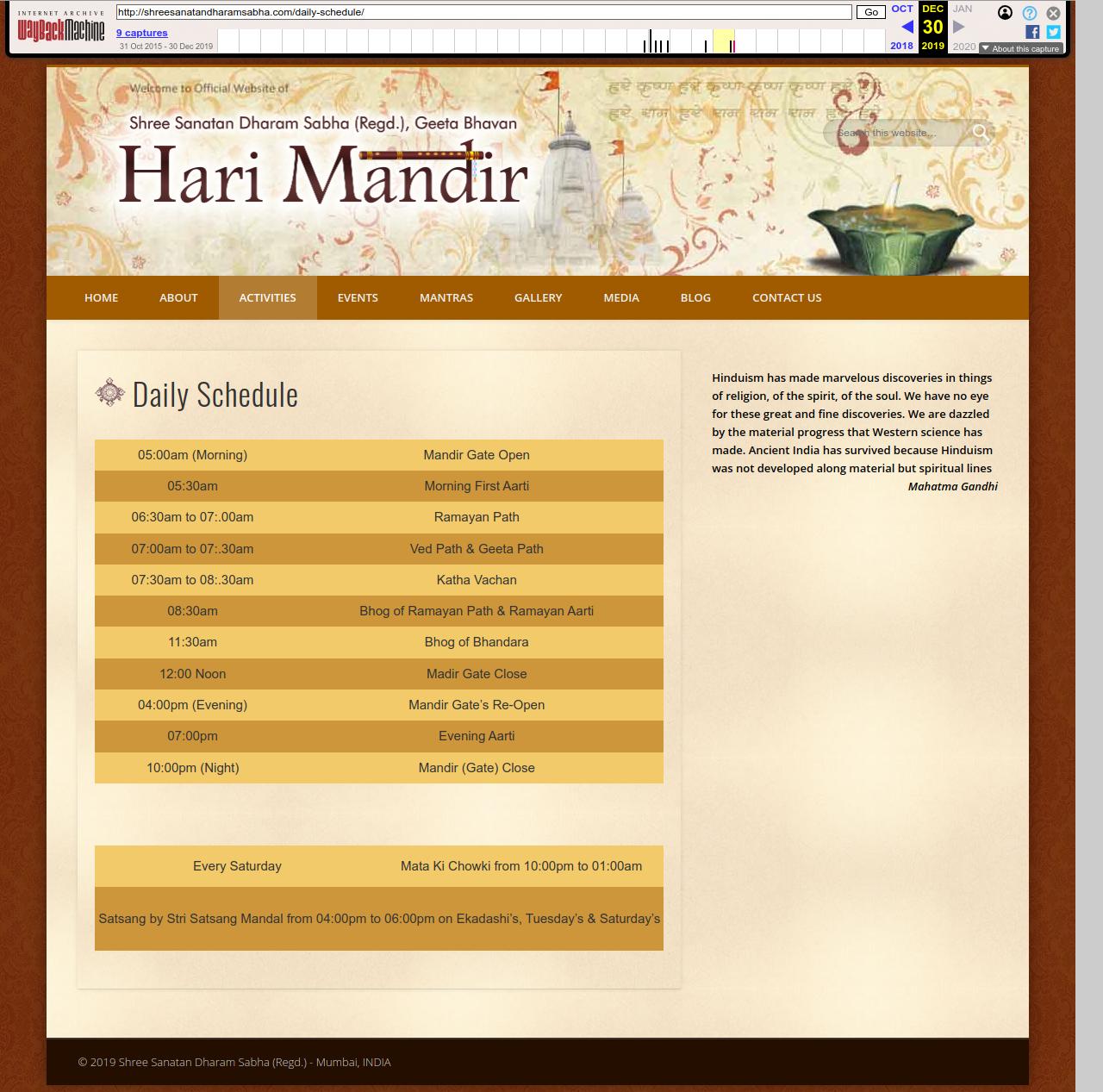
Morning: Opens 5:00 AM, Aarti at 5:30 AM, closes 12:00 Noon. Evening: Opens 4:00 PM, Aarti at 7:00 PM, closes 10:00 PM. Saturday special: Mata Ki Chowki from 10:00 PM to 1:00 AM.
Which deities are worshipped at Hari Mandir?
The centre shrine has Ram Darbar (Shri Rama, Sita, Lakshmana, Hanuman) with Radhe-Krishna. Left shrine has Shiva-Parvati. Right shrine has Durga and Santoshi Mata. There is also a Shivling shrine for Jal-Abhishek, and the sacred Akhand Jyoti from Vaishnodevi.
What is special about the Akhand Jyoti at Hari Mandir?
On 13 September 2006, the Trust brought an Akhand (uninterrupted, ever-burning) Jyoti from the Divine Enclave of Mata Vaishnodevi in Jammu and installed it at Hari Mandir. It has been burning continuously ever since and is the only such Jyoti in all of Mumbai.
When was Hari Mandir established?
Hari Mandir was formally established on 13 April 1950. Its story begins in 1947 when Partition refugees settled in the military barracks of GTB Nagar and created a makeshift temple with mats for walls and tin for the roof. The Trust was formally registered in 1953.